HORSE/THE ANIMAL
Before asking what a horse can do for us, ask what a horse is.
Horses are social, sensitive, embodied beings for whom relationships are essential. They are different from us. As prey animals, their first response to danger is usually to move away or flee when escape is possible; aggression tends to emerge when they feel threatened and cannot escape. Within the herd, social relationships and hierarchies help organise their shared life, offering a sense of order and belonging. To a horse, the herd is more than company: it is part of what makes the world familiar. Their excellent memory allows them to recognise familiar people, horses and places, and remember past experiences. Their behaviour is also shaped by instincts inherited through generations.
Even a hoof, which appears hard and insensitive, belongs to a highly sensitive system. Through vision, touch, proprioception and other senses, horses perceive the ground beneath them and adjust their movements with remarkable precision. In a small stall, Madre never once stepped on her sleeping foal.
As an individual
Each horse has history, preferences, relationships, boundaries and experience. Pain, fears, moods, memory.
There is no generic horse.
A grazing animal
A horse evolved as a grazing animal, spending much of its day moving, selecting and eating relatively small amounts of forage. Its digestive system is adapted to a steady flow of fibrous food rather than a few large meals.
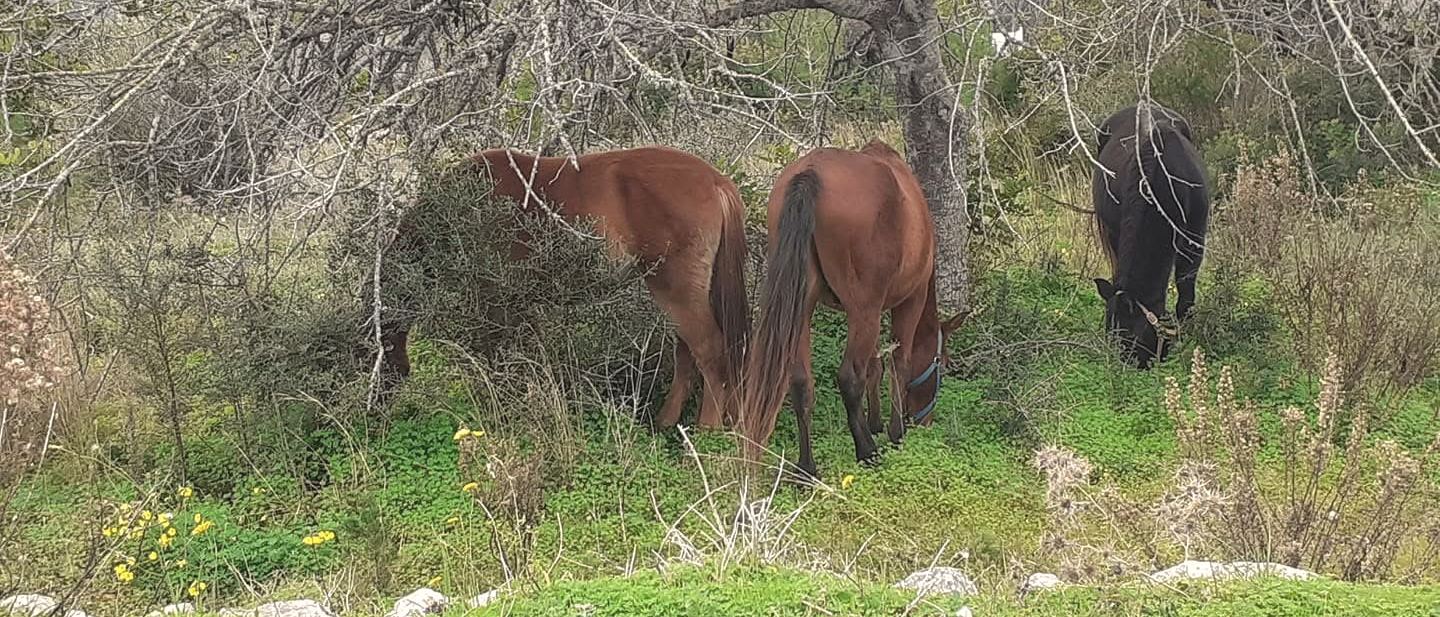
Feeding is not only eating. It is movement, exploration, selection and time. A horse may graze close to the ground, browse higher vegetation, and reach for leaves or fruit in the trees, stretching a neck that carries a head of up to twenty kilos.
When we decide how a domestic horse is fed, we are deciding much more than what goes into its stomach.
Take away the land, and you take away more than grass. You may also take away movement, exploration, social life, choice and the rhythms of ordinary horse life.
Under human control
Horses decide
Humans decide
- Where they live.
- What they eat.
- Where they move.
- Who they meet.
- Whether they reproduce.
- Whether they are ridden.
- Whether they are sold.
- Whether they are slaughtered.
This makes human responsibility unavoidable.
Without a job
A horse can become old, injured, difficult, slow, unrideable. What happens then?
In Spain, 28,015 equines were slaughtered in Spanish slaughterhouses in 2024 for meat production. This figure includes equines and should not be read as a count of horses alone. Here in Ibiza, we have seen for years how trotters that break into a gallop in races are sent to slaughter too.
A horse can spend years serving a human activity and still face a future in which the price of its body matters more than the possibility of its continued life.
Even wild horses, who do no work for humans, are killed. In Australia, thousands of wild horses have been shot from helicopters in a national park in recent years. In the United States, wild horses are rounded up from public land every year, and many are bought only to be sold on for slaughter. The reason given is that there are too many of them for the land available. Often it is land also used for grazing cattle and sheep, or set aside for other wildlife.
And when a horse is removed from the place where it lives, another question follows:
Where can it go?
Choose Life
More room for everything that becomes possible when we choose life.
There are worlds we have barely begun to imagine. Places where horses can live out their whole lives, where people can slow down, breathe, observe, wonder, and rediscover what it means to be alive. Places where different species share the land, where soil can breathe, where life is given room to unfold in its own ways and in its own time.
What if we created more of these places? What if, instead of asking what else we can get from the world, we began asking what more we could give it? More freedom. More space. More life. More possibilities for humans and other species to flourish together.
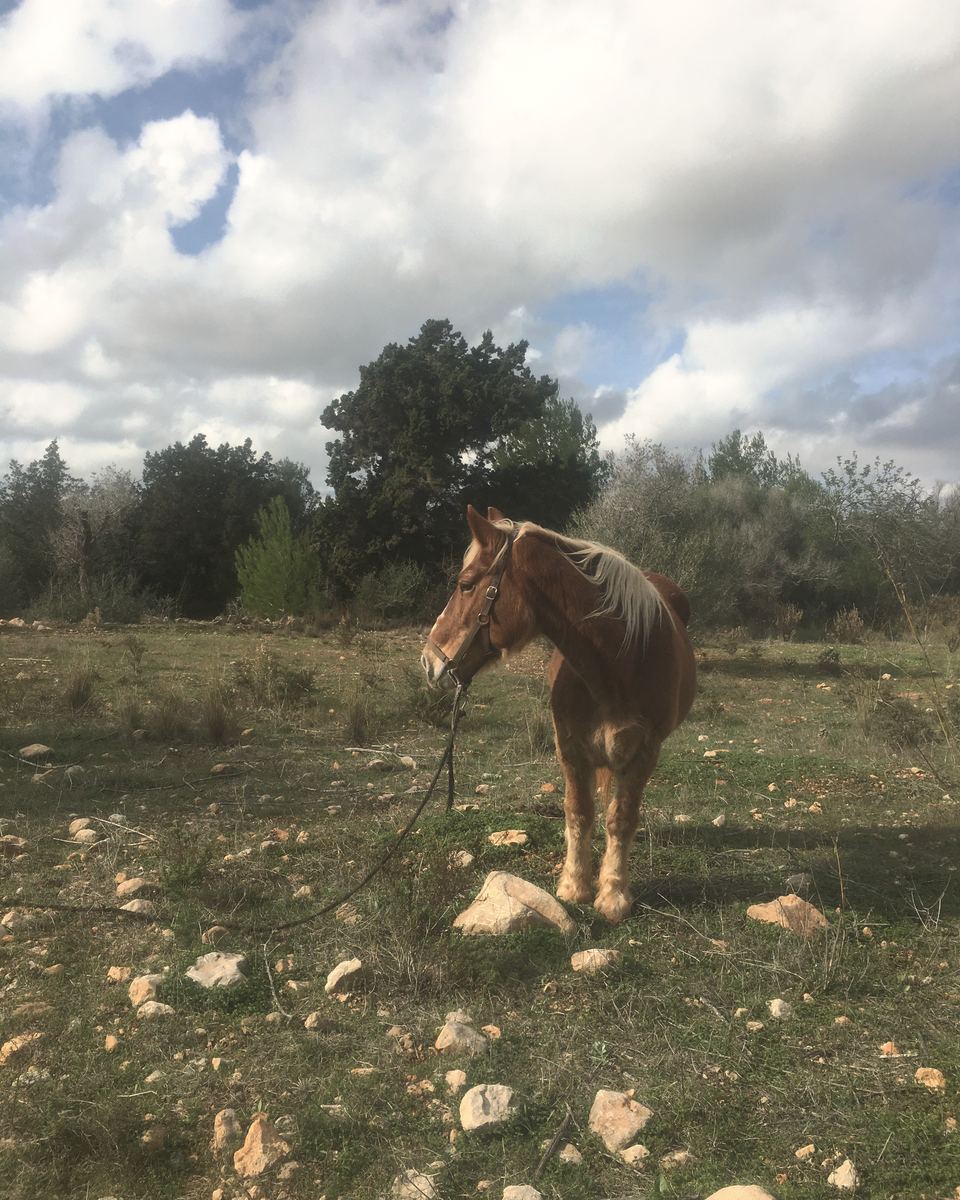
This is not a dream reserved for a few. It is an invitation to all of us: individuals, private donors, communities, companies, and governmental institutions. Everyone who believes in the value of life, in a balanced society, in the preservation of the Earth, its soil, and its species, and in the countless ways they have shaped our growth and culture over thousands of years.
Let us create places where Life is not measured by what it gives us, but welcomed for what it is.
More room for horses. More room for nature. More room for people to discover, to learn, to belong.