HORSE/WILD HORSES/WILLIAM SIMPSON II
Free living-only place: Wild Horse Fire Brigade
William E. Simpson II · Michelle Gough · Siskiyou Mountains, USA
William E. Simpson II and Michelle Gough care for a protected herd of about 200 wild horses, on a ranch deep in the wilderness, completely off the grid. Alongside the herd, they rescue horses, do research, write articles and speak up for wild horses. Their work depends on donations, and today the budget barely covers what they already do.
Wild Horse Fire Brigade
We take William Simpson II and his Wild Horse Fire Brigade as a reference. For years they have lived among wild horses. They are researchers: they know what wild horses are, and what the energy of a horse, its influence, means for a human being.
Wild Horse Fire Brigade is a non-profit in California. Its plan restores wild horses to designated wilderness areas, where they graze the wildfire fuels.
They describe twelve benefits of their plan: for the horses, who are saved and live wild again; for the land and the forests, with less fuel for fire, native seeds spread in the dung, richer soils and less erosion; for deer, elk and fish; and for people, with lower public costs, fewer controlled burns and new eco-tourism.
His work
- Wild horse ecology
- Ethology
- Wild horse management
- Insights into their sacred lives
- Life experiences living among the wild
- Biofelt energy healing with wild horses
- Wildfire fuels management with wild horses
- Post-wildfire wilderness regeneration with wild horses
- Building trust with wild horses
- Spirit horses and their value in a modern world
His story
William Simpson II is the senior wild horse researcher of Wild Horse Fire Brigade. Through his personal devotion to the wild ones, he has gained full protective rights over an entire cultural heritage herd of wild horses, some carrying ancient genetic markers.
For 12 years he has lived inside a free-roaming mountain herd, every day, as an embedded observer.
He shares his life and research with Michelle Gough, M.S., of Cherokee-Choctaw heritage, who writes about it on her Substack.
Michelle Gough, Echoes from the Edge
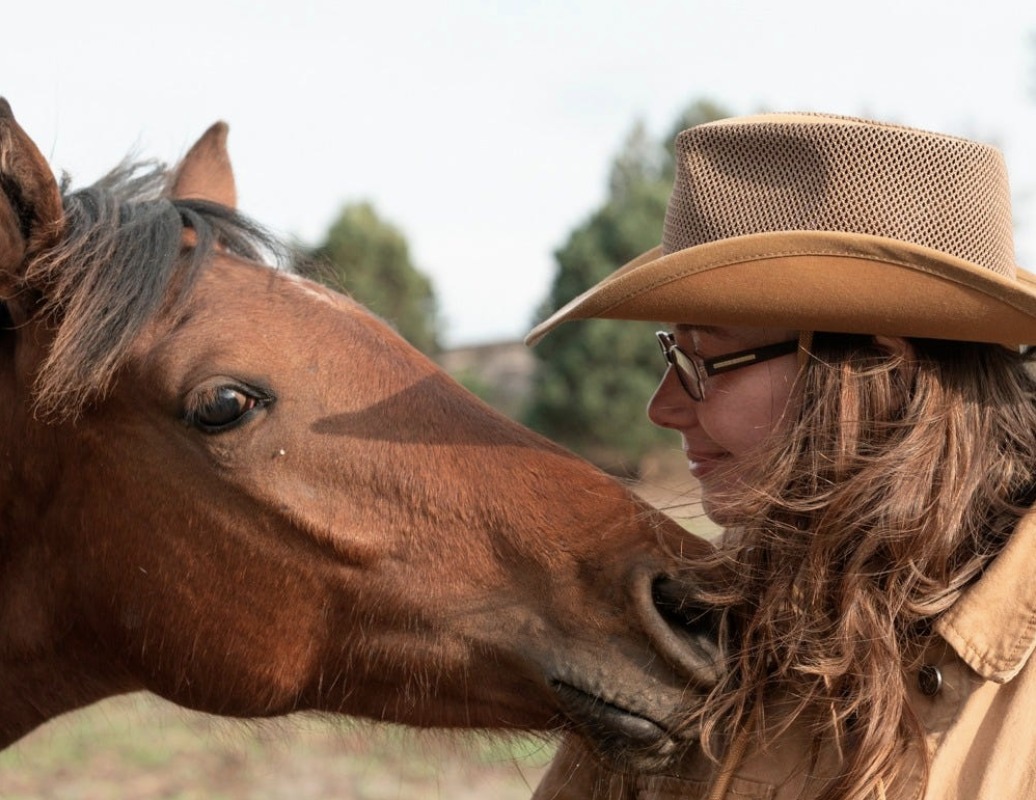
They live deep in the Siskiyou Mountains, on the Oregon–California border, among free-roaming heritage wild horses.
“I live at the edge of the wild—where the whispers of ancient forests, rushing creeks, and free-roaming horses carry stories older than memory. As @echoesfromtheedge, I share the echoes of this untamed world: the quiet wisdom of cultural-heritage wild horses, the rhythms of wilderness life, and the deep connections that bind us to the land and its creatures.”
William also writes songs. Their words come from his poetry and his articles about life with the wild horses in the wilderness, and some have become music videos.
Spirit Horse · © 2025 William E. Simpson II
In the Spirit Horse’s own voice, this song declares eternal presence, sacred kinship, and unity with the land and its original peoples.
The horse speaks as a primordial relative—always here, never “introduced”—echoing Indigenous oral histories of deep, pre-colonial bonds. Emerging science affirms horses were part of Native lifeways far earlier than claimed.
From Lakota cosmology:
- Wakan Tanka — Great Sacred Mystery, life’s essence in all.
- Wakíŋyaŋ (Thunder Beings) — sky spirits of storm, renewal, healing; they gifted the horse as a bridge to the spirit world.
Horses (šúŋkawakȟáŋ — “holy/mysterious dog”) are revered equals in the Horse Nation, embodying power, freedom, depth. No symbol—this is the horse’s truth. Ancestors never forgot.
It calls to Mitakuye Oyasin—“we are all related”—to honor land, ancestors, relatives. In disconnection, reconnect for healing and unity.
Written from the wilderness by William E. Simpson II
All the horses in this video are real horses that live in the Wild Horse Fire Brigade herd, except the great white Spirit Horse. Michelle Gough took the photographs, and they were brought to life by computer animation.
William wrote and composed this song, inspired by the wild spirit horses who are his friends. Every stream on Spotify and other platforms sends about three cents to Wild Horse Fire Brigade; he keeps none of it. He cannot sing his own songs any more: the voice is a tool, the words are his.
The Klamathon Fire
In 2018 the Klamathon Fire burned about 38,000 acres near Hornbrook, California. William stayed on the fire line for nine days as an unpaid technical advisor to CAL FIRE, to watch over the wild horses and help the crews. His wife Laura, who had built the ranch with him over 47 years, refused to leave the horses. The smoke scarred William's lungs and took his voice. It took Laura's life.
On that fire line he saw the wild horses graze calmly about 200 yards from the flames. They had already eaten down the grass and brush, so there was less fuel and the fire could be fought.
Source: Wild Horse Fire Brigade ↗
Play The fires and William's work. Film: Sam Bentley, Good News Planet Earth ↗, with thanks.If you want the horses to stay wild, you can support their work directly.