WHERE IT BEGAN/THE STORY
It started with one horse.
The spirit
Daj Buzi
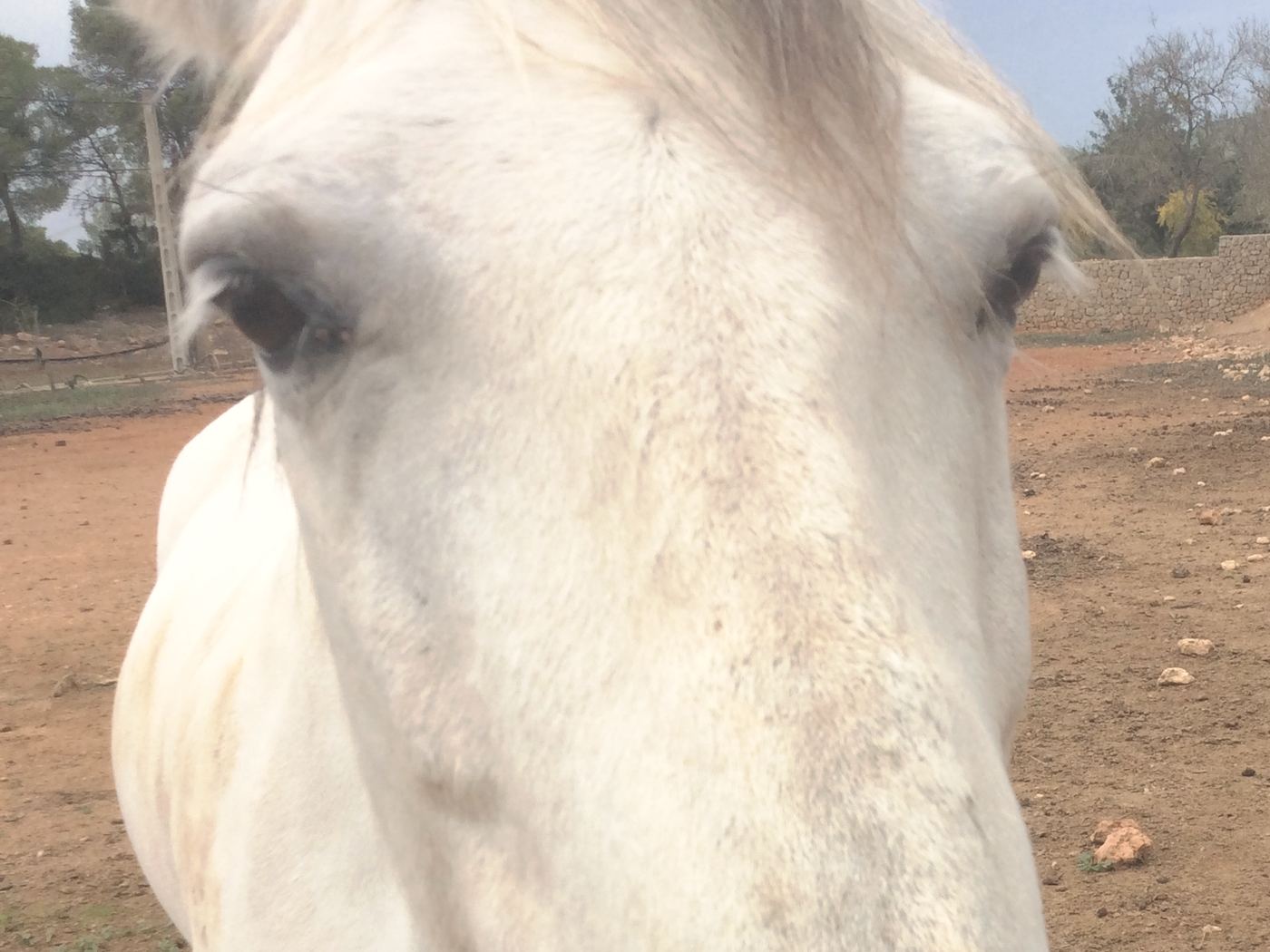
Daj Buzi is Polish for “give me a kiss.”
As a child I was not allowed near horses. My biggest dream, the one I thought was impossible, was a horse of my own. I sneaked out to sit on any horse I could find, safe or not. As a teenager I worked with young stallions in exchange for riding. Later came school, university, a child, work, and only the odd weekend with horses. In Germany I cared for someone else's horse and rode alone in the woods.
In Ibiza I found out that horses were being given away. A friend wrote on Facebook that she wanted to adopt a horse. I wrote underneath: me too.
I expected an old horse who would need a lot of care. Instead, Daj Buzi was waiting. Only then did I realise that the horse in my dream had always been white.
He was six, and thin. I rode him home. On the way he stopped and would not go on. A farmer told me someone had fallen from him on that spot two weeks before, when a dog bit his leg. I got off before we reached home, so I would not fall when Kapitan came running to greet us. Two days later, Kapitan and Daj Buzi were best friends.
I kept helping more and more horses from Ibiza find their ultimate home. Why were they given away “for free”? That question did not let me sleep. I wished to find a way for humans to start understanding how valuable each horse is.
At that time, I did not know that this value is real for every horse.
For me, the first value of a horse is its presence. Every living horse offers it. A horse may be able to jump or run, and that has value too. But a horse that can do none of this still has its presence, and that value is great. That is why no horse should be given away for free.
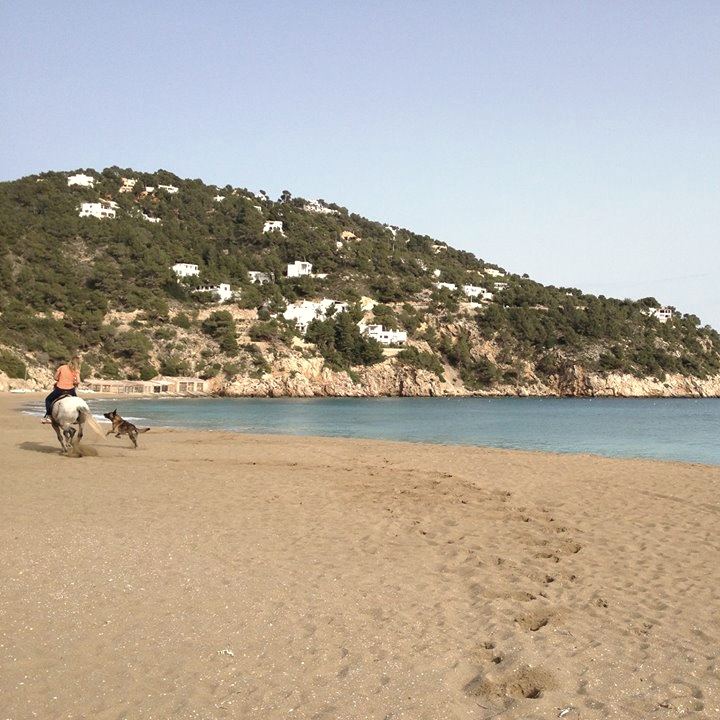
For three years it was just the three of us, in a valley near Sant Vicent with twelve houses along one long dirt road. I rode Daj Buzi everywhere: to work, to visit friends, to give massages, to parties at the neighbours'. I rode from neighbour to neighbour to see that everyone was all right, and carried messages. I would leave him at the door of a finca and come out two hours later. He was always there, grazing, with no rope. Tourist jeeps on safari would stop to photograph us. There was nothing wilder in that valley.
Animal Agency
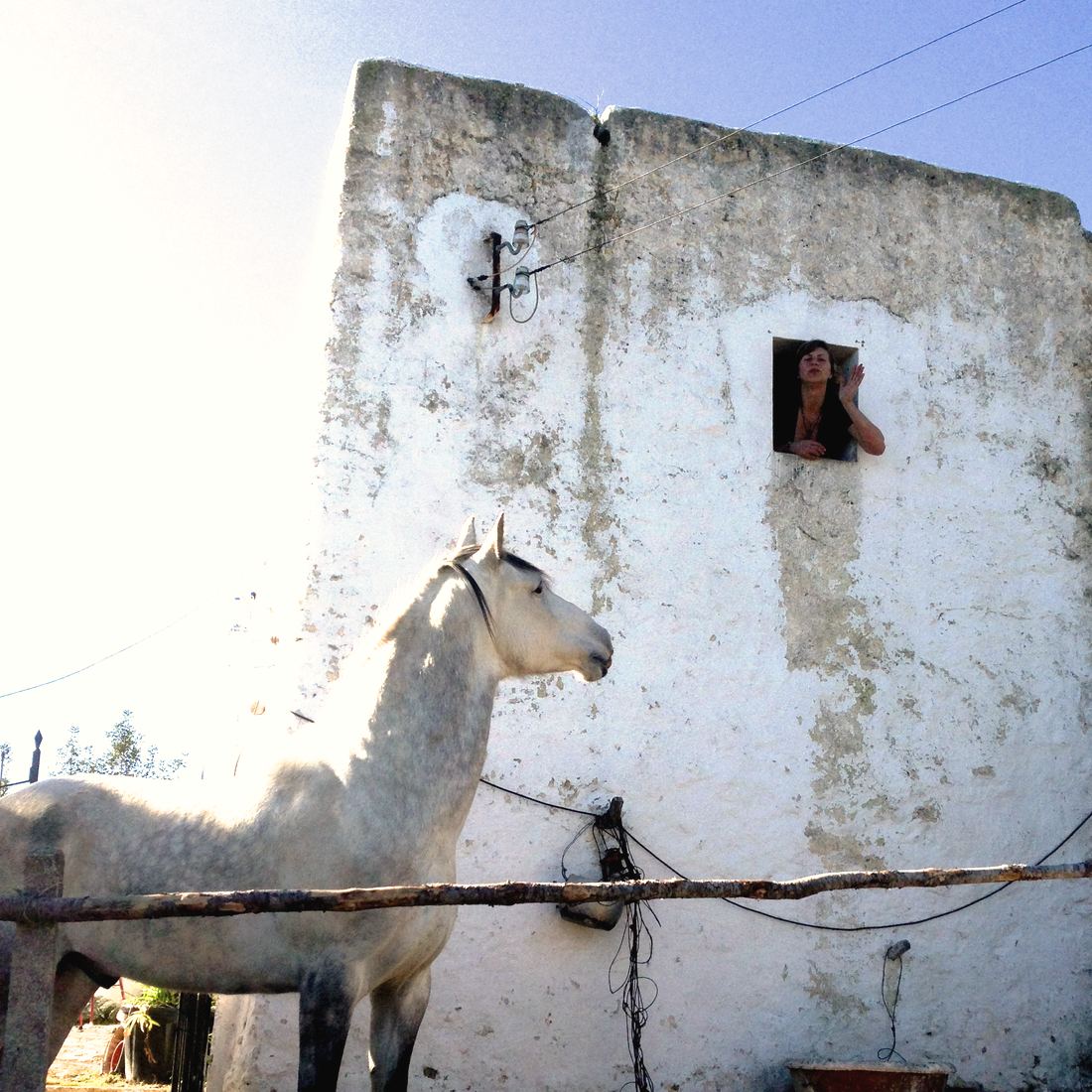
Then Daj Buzi, Kapitan and I went on a mission, to a place where the horses were not looked after, and the owner would neither sell them nor give them away. So I stayed to restore animal agency and dignity there. For four years I lived in the garage, slept in one of the six horse carts stored there, and cared for them.
Madre and Padre had lived there for twenty years without papers or a vet, mostly in the dark. I had them chipped and registered. Many of Madre's foals had not survived their first months. I saw one who nearly died, and I organised an Italian family who could pay for her rescue. She is called Bienvenida now. When Kashi Pushi arrived, a five-month-old foal whose mother had no milk, Madre, who was nursing Gienia, would not accept him. He was lost and looking for a safe place. I started to feed him and give him a mother's security. One can see today how confident and full of trust he is with humans.
At a shelter nearby I found Kapitan's brother, Rumi, in a critical state, and took him home too. The two of them lived with me for nine more years.
The seed
Santuario Animal Can Tigres Ibiza
All those years I was dreaming of finding a place for me and all these horses, as the owner, in theory, didn't want them. Finally a good man, Vicente, said I could come to his place. He was living there alone with thirty cats.
When I left, I could only take one horse in exchange for caring for them all those years. I was devastated, and I chose Kashi Pushi.
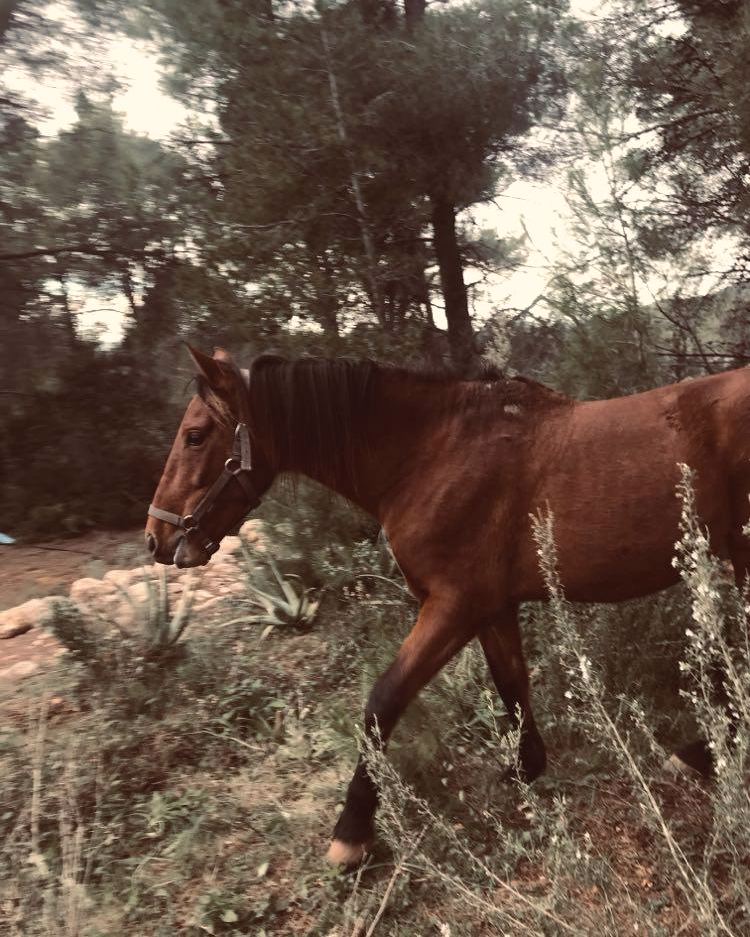
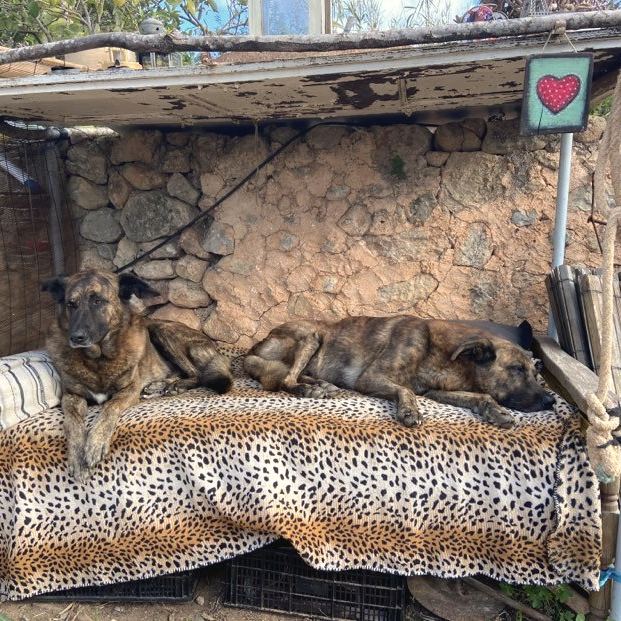
I gathered the animals on old farmland full of young pines. There was no water and no electricity; I brought both in before the horses came. I named the place after my animals: Kapitan and Rumi, two brindle dogs, and a tabby cat called Gatito, all striped like tigers. Can Tigres. It was my friend Sibli's idea to call it a sanctuary. In time I understood that for these horses, I am the sanctuary — wherever I live.
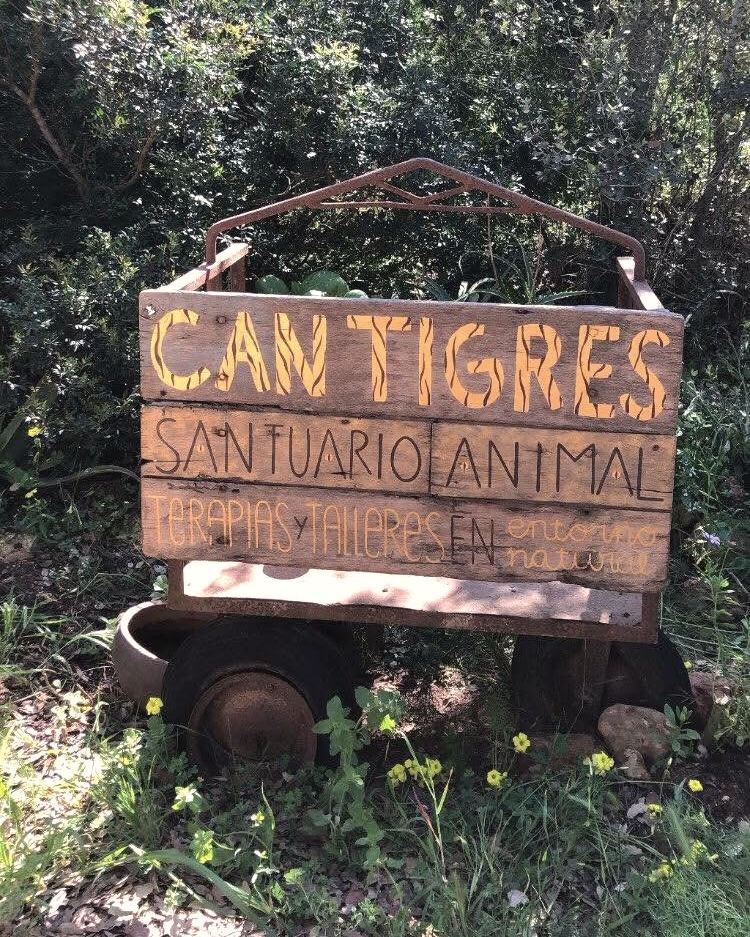
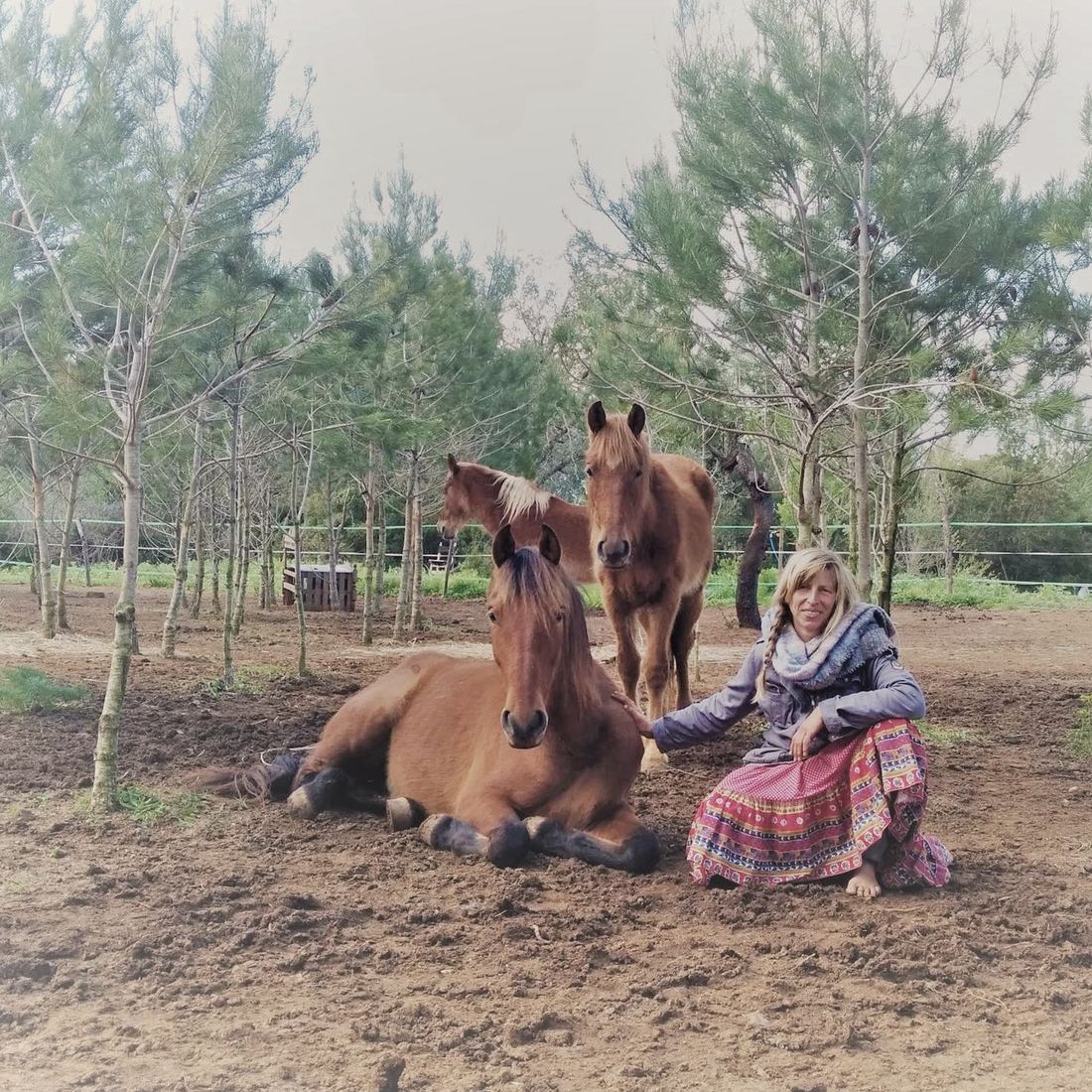
The day it opened, my friends Ale and Sibli and I held a small ritual for protection, with a drum.
Madre came with her foal Shanti, bought with the only official fundraiser I have ever run. It took only two days to collect the 700 euros. I was impressed. I adopted Minou, an orphan sheep, from a farmer, and I organised the neutering of thirty of Vicente's cats.
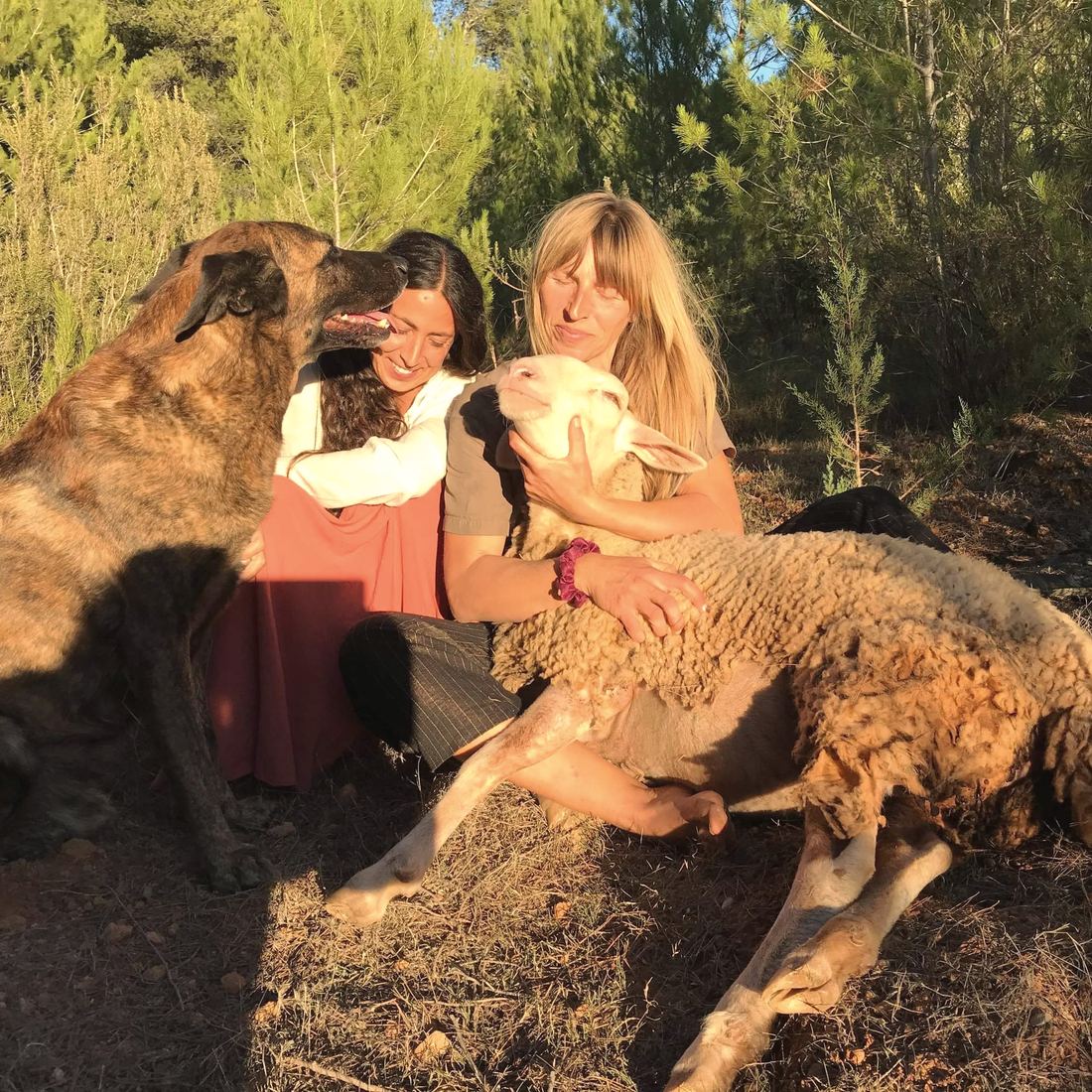
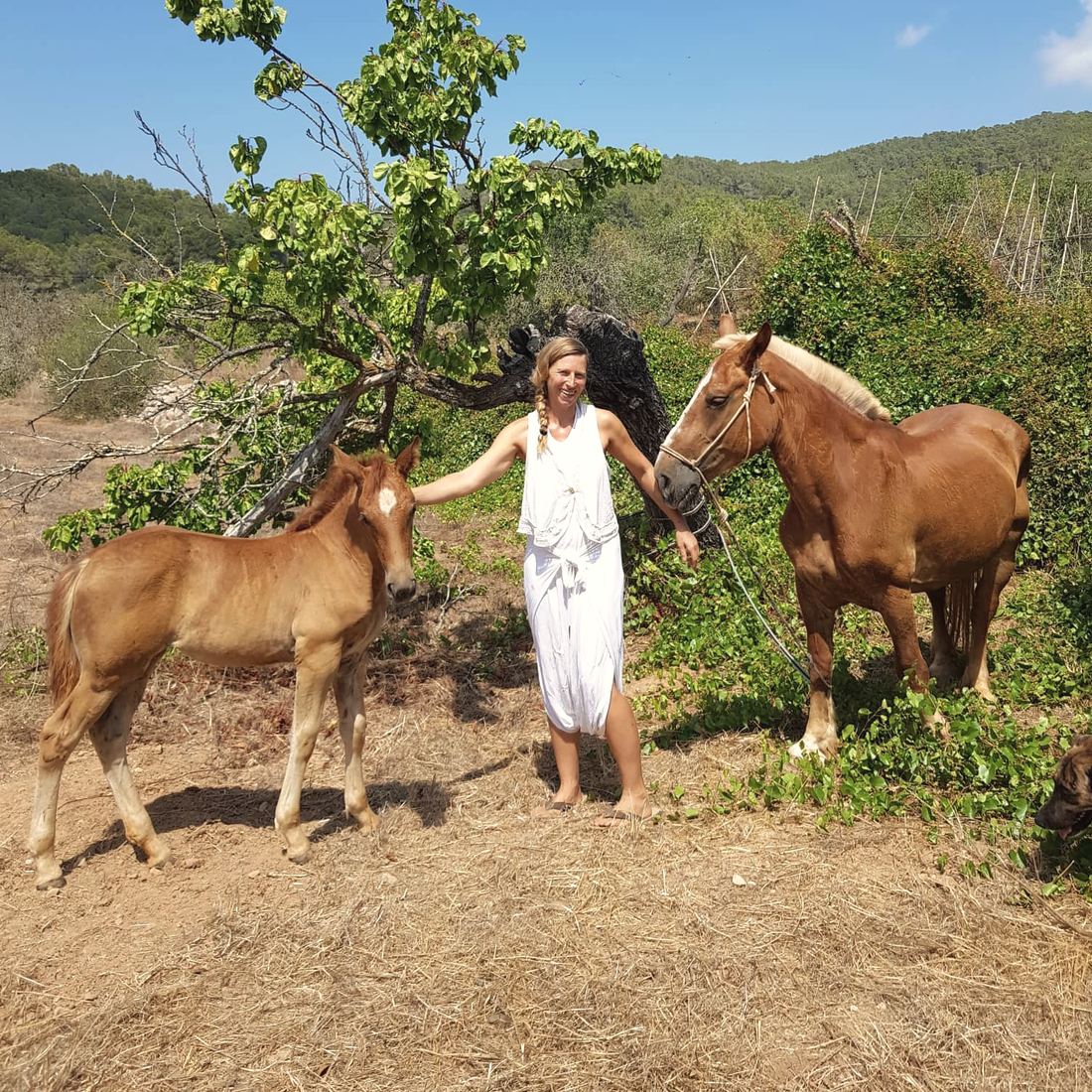
It was there that I began to let people simply be with the horses. It gave life, fun and hope to hundreds of people.
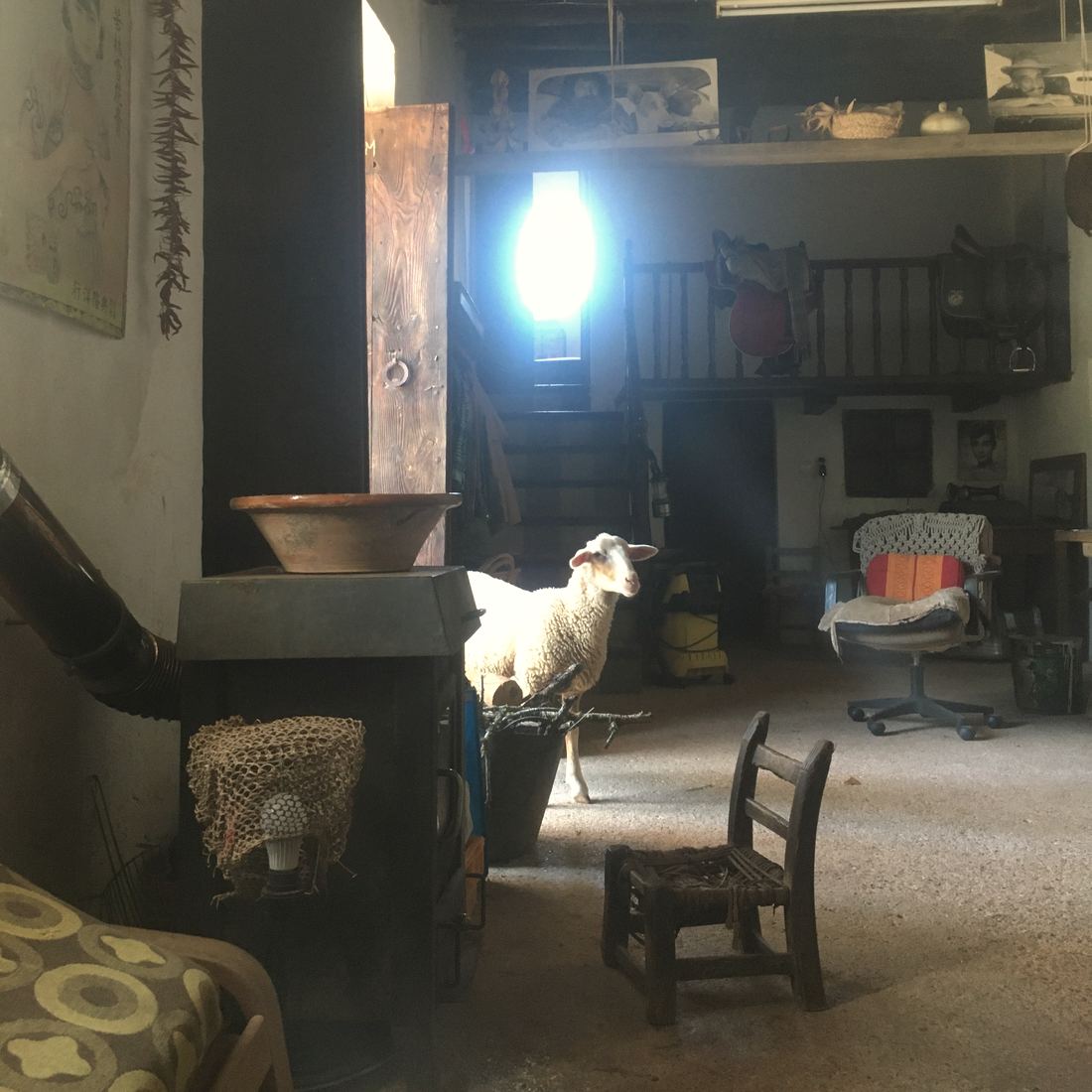
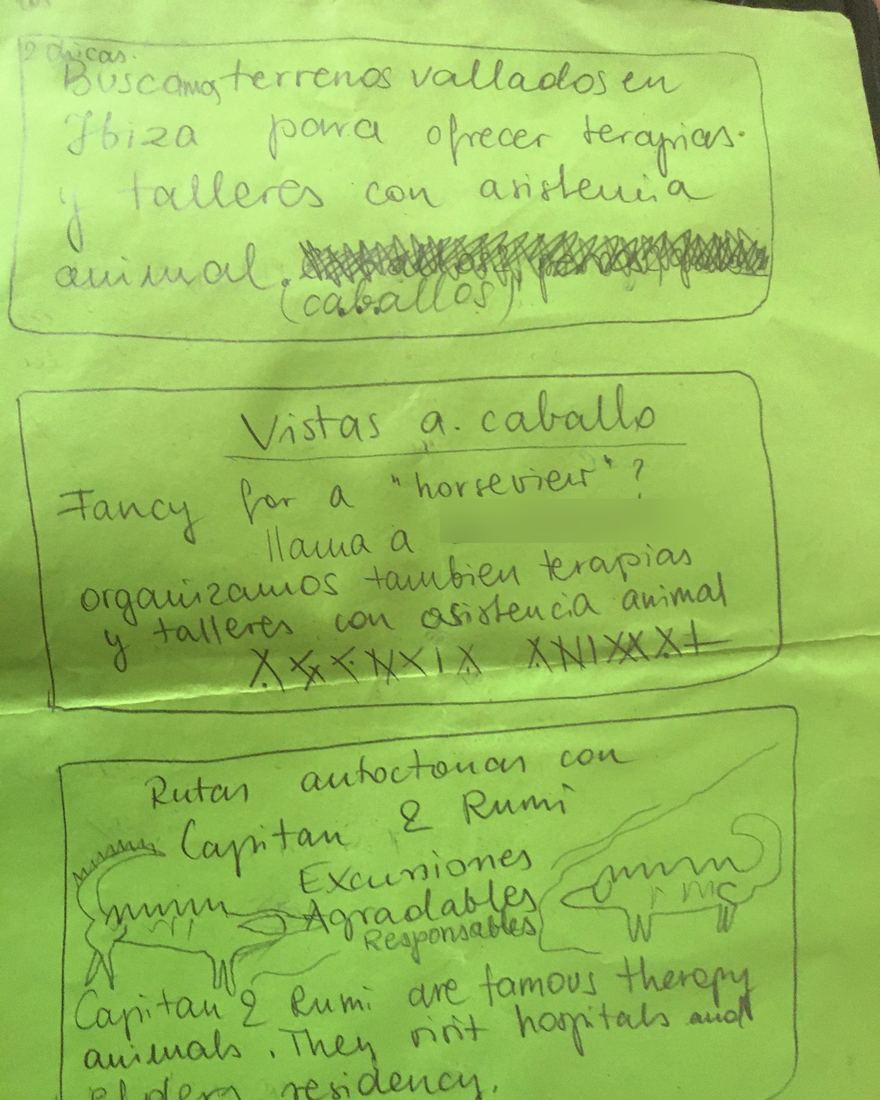
His finca was in really bad shape and needed renovation. When the family came to repair the finca and live there, the sanctuary closed.
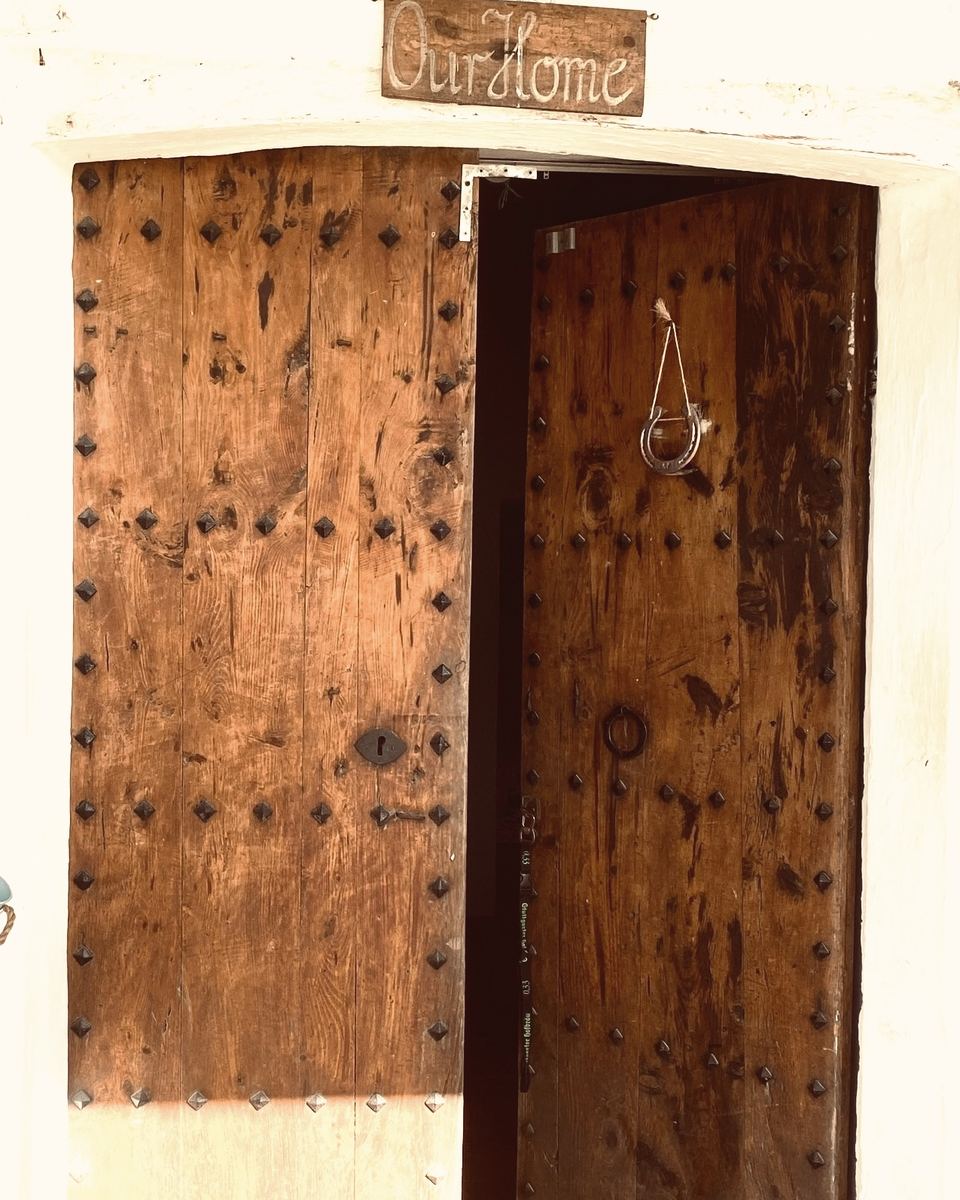
The horses still needed a home. So I found one: Our Home Can Tigres, on a hill three kilometres from the beach where Daj Buzi and I used to ride. After many years, I had come back to my favourite place on the island: the small, forgotten village of Sant Vicent.
The guardian
Padre
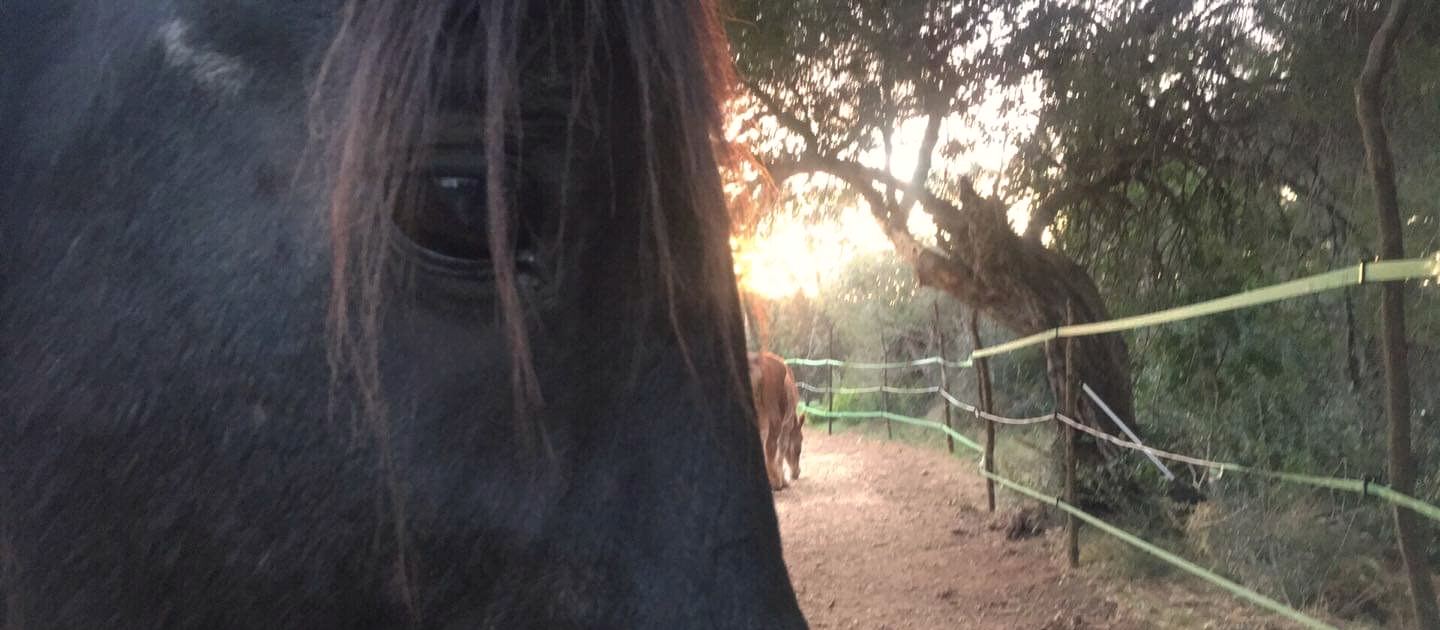
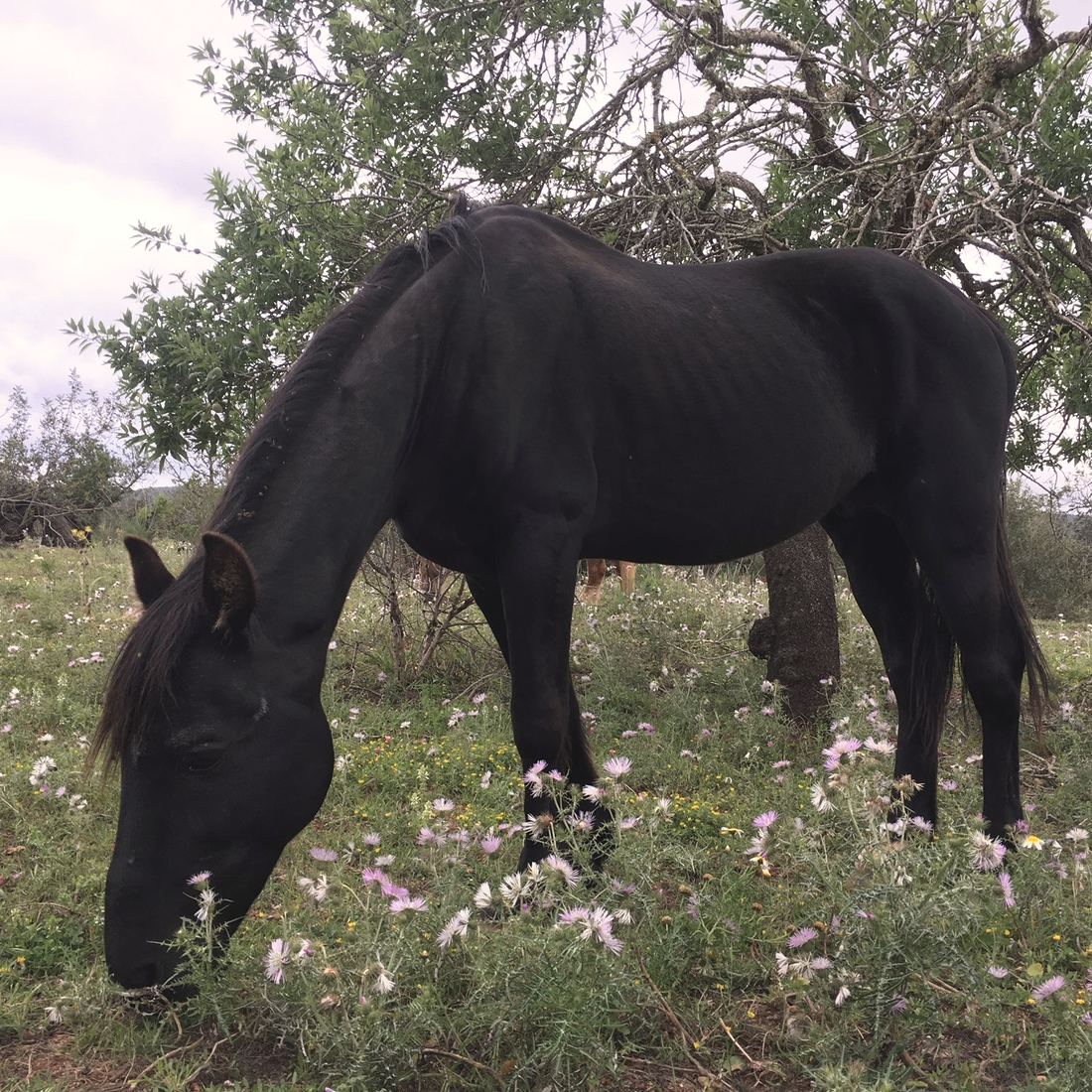
Padre's first name was Tin Tin, like his father: a black trotter, probably sold cheap because he was too slow to race, and kept to sire foals. Padre was one of them, Tin Tin Jr., and the one who stayed.
People said Padre was difficult. He was not. He was the most peaceful horse I have ever known, and he always did what he wanted, calmly and consistently. When other horses kicked him to keep him from their food, he simply carried on, as peaceful as ever. His peace, and his devotion to his inner voice, were his strength.
He spent nine months chained in a stall before I could bring him out. I walked him home through the mountains, eight or ten kilometres. He called out every time he saw a wide horizon.
He was the first horse at the sanctuary. He died in January 2026, almost forty years old.
Padre was not the beginning of the idea. But when he died, I suddenly thought that maybe I should stop. I had only three horses left, and I would just wait until they finished their lives.
Then I went to meditate in the place where Padre died, and I received a message from him: You must go on, and with even more love and dedication.
So here I am.
Can the time people spend with horses help keep a place for them?
Where the idea comes from
The idea for Horse Presence came to me around eight years ago, when I had rescued so many horses in Ibiza that I could no longer ride them all. I simply didn’t have the time or the space.
But I noticed something very important: I didn’t miss riding.
I continued massaging the horses, touching them, spending time with them, feeding them and simply being with them. And I started to realize that there was something in the presence of a horse that was deeply valuable, even without riding.
I had been drawn to horses since I was a child. I never had my own horse, and I didn’t even have permission from my parents to ride or to go to the hippodrome near my home. But I was always finding my way there. Sometimes I couldn’t ride because I didn’t have the money or the permission, but I loved simply spending time around horses.
For a long time, I was focused on the idea that I needed to ride. That was what I had learned from the world around me: that having a relationship with a horse meant riding it. I didn’t yet understand how much horses themselves need to simply be horses — to live with other horses, to have space, to move freely if they want to, and to have access to food throughout the day.
Then, in Ibiza, I began to experience something different.
I found a place in the woods where I could bring people to simply be with the horses. I had no association, no formal structure. People came and gave donations. They danced, practiced yoga almost between the horses, brought their children, celebrated birthdays, and joined workshops and family activities. Something very beautiful happened there: people came together as a community.
And somehow, the horses made this possible.
People were so happy. They would often leave something behind for the horses, and I didn’t have to worry about what they would eat the next day.
I also began noticing how strongly the horses influenced people. I couldn’t fully explain why, but I could see that something happened simply through their presence.
To do this work, I had to unlearn much of what I had learned before.
I am a sports teacher and a personal trainer, and I am also a mother. I was used to speaking to people from a position of authority — telling people what to do and what was best for them.
With horses, I learned something completely different.
I learned to become non-judgmental. I learned that I don't know what is best for another person. They know.
The horses are part of this process, but they are not forced to do anything. Their freedom is essential.
When I moved to the beautiful, magical village of Sant Vicent, I found a new home for the horses. I kept the name Cantigres, from the sanctuary I had before, and I began to imagine a different future.
At first, I thought I would simply create a business where people paid for sessions instead of the horses living from donations. But I slowly understood that there was something much bigger here.
In summer, for example, the horses are not always available for sessions. The sun, flies and allergies can make it too much for them. And that taught me something else: the horses don't have to perform.
Their job can simply be to be.
They are free to participate, and they are free to leave. If a horse walks away, that also has meaning.
I also live with the horses. They are around the house, and when I sleep outside and hear them nearby, I feel different. I sleep better. I feel cared for.
Other people who have stayed here have told me that they feel something incredible in the energy of the house. I believe that this is not only about doing a constellation or a particular session. There is something about the presence of horses itself.
And this brings me back to my own story.
When I first came to Ibiza, I had always dreamed of having a horse. In my dream, the horse was white.
Then, in 2012, while caring for an older man and learning more about the roots of Ibiza, I had the opportunity to adopt a horse. I imagined that the horse would be one that nobody wanted — small, old, sick, perhaps difficult.
Instead, I was given a beautiful, young, white horse that I could even ride.
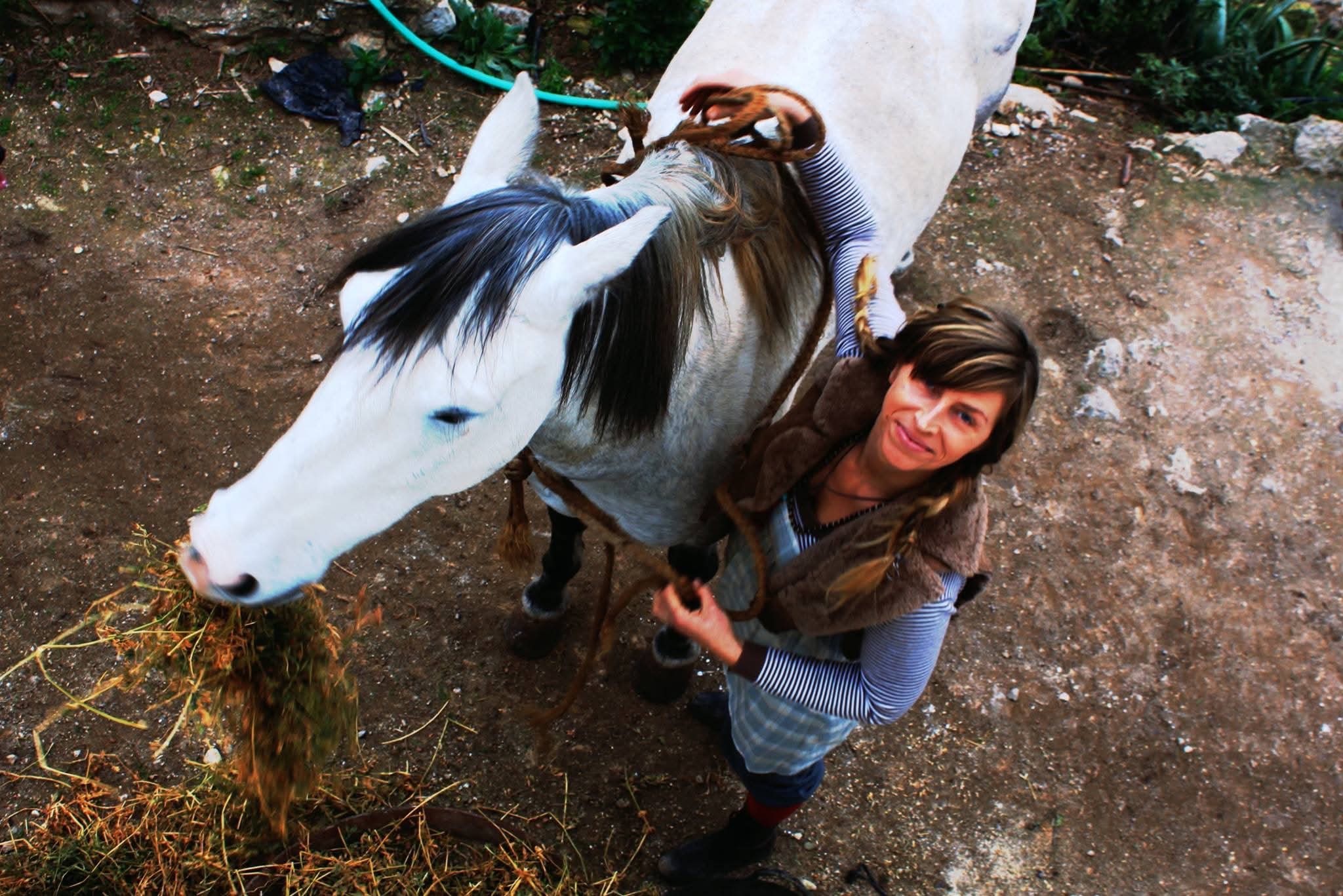
And I remember asking myself: How can this horse have no value? How can people simply give away a young, beautiful horse?
That question stayed with me.
I began to see the brutal reality of horses in Ibiza and elsewhere: horses can become almost without value when they no longer perform what humans expect from them. Some end up waiting for death or being sent to slaughter. And around the world there are also many horses who are considered to have no place.
I want to make space for them.
I want to find out whether people can value not the horse as a product, but the presence of the horse — whether that horse is old, injured, young, beautiful, or unable to perform.
Could the mere presence of horses be so valuable that places where horses live freely, in their own way, with us, can sustain themselves?
This is the question behind Horse Presence.
I imagine places where horses can live freely, where people can come simply to visit them, to be with them, or to have guided experiences. Places that could be supported by private people, institutions and, perhaps one day, governments — because I believe that being around horses, nature and our own nature may have something to contribute to a more balanced society.
And this is why I am starting this project now.
I have this beautiful home, and I believe it could become a meeting place for researchers, filmmakers and people who want to explore this question with me.
What if we looked again at why horses are needed in the world?
Or perhaps we discover that they are not needed in the way we have traditionally thought.
What if we re-evaluate presence itself — not only as something horses offer us, but as something essential to life?
This is what I want to explore through Horse Presence.
If you believe the answer is YES…
Humans who love horses without needing to possess them. Who are close without controlling. And value observation without interfering. Horse Presence Keepers who protect without taking away horses' freedom to be themselves.
Make room for Horses.