RESEARCH/SUSTAINABILITY
What it takes for a place to last.
There is a fine line between a horse merely surviving and a horse truly living well. The same line runs through the life of the person who cares for it.
A living-only place for horses can endure only when both are on the right side of that line. If a horse falls ill, the place can survive as long as its carer remains healthy, has the means to provide treatment, and can afford the cost of healing. But if the carer falls ill, everything is put at risk. There is no equivalent safety net, no one to sustain the life that sustains all the others.
It cannot work in reverse.
Perhaps it is much like having children. We take away their freedom to live entirely for themselves, assuming responsibility for their lives and well-being. And in doing so, we accept the price of that responsibility: their lives become bound to ours, and ours to theirs.
That is what sustainability means here. Not whether a freer place is cheaper than stables. Whether a place like this can exist in twenty years.
The horse's side of the line
- Company and friends.
- Water, food and movement, every day.
- Sunlight, and shade.
- Play.
- A sense of safety.
- A roof, when it needs one.
A horse is energy, and money is energy. To sustain an animal of five hundred kilos that cannot live its natural life, a lot of energy is needed. Many horses see green grass just behind the fence and never get to taste it. Everything in their life is artificial. Many live alone, closed in, fed irregularly and not enough.
The carer's side of the line
Five horses, one carer: about five hours a day, every day of the year, because the horses know you. That leaves little time for other work. So part of the carer's own basic needs has to be covered by it: shelter, food or money.
And the life must not be a stressed one. The horses are already closed in, against their nature. If we come to them with a bad mood, sadness or impatience, they feel it. They need us patient, silent, present and attentive; then they feel safe with us. The horse feels like you feel.
People who rescue horses live on the minimum. Everything else goes to the next horse, the next life saved. The dentist, the car: not a priority. I hitchhike. For me the priority is that the horse will survive.
When the owner is not well, the horses are not well. It takes time, because the owner keeps caring as long as they can. I have seen it many times, especially here in Ibiza. Sometimes owners say honestly that it is too much, or they are ill, and that is all right too. Then we help the horses find another place before things go down too far. People here are connected, and we react early.
The land
On Ibiza, 90% of what a horse eats comes by boat. The land gives green in winter, and plenty of carobs from September. But a horse can eat only a little of either: carobs are a supplement, a little like chocolate, and too much fresh green is hard on its digestion. Horses can graze all day on safe pasture, but rich grass often needs controlled access to avoid health problems. Growing hay here is a gamble: seeds, someone to sow, water that is not there or too expensive, a tractor, a baler, transport, and no guarantee of rain. For someone who owns land and machines it costs hours and fuel; for everyone else it costs everything, and the quality would not be the same. So we buy first-class hay without grain, right for horses that do not work and need little protein.
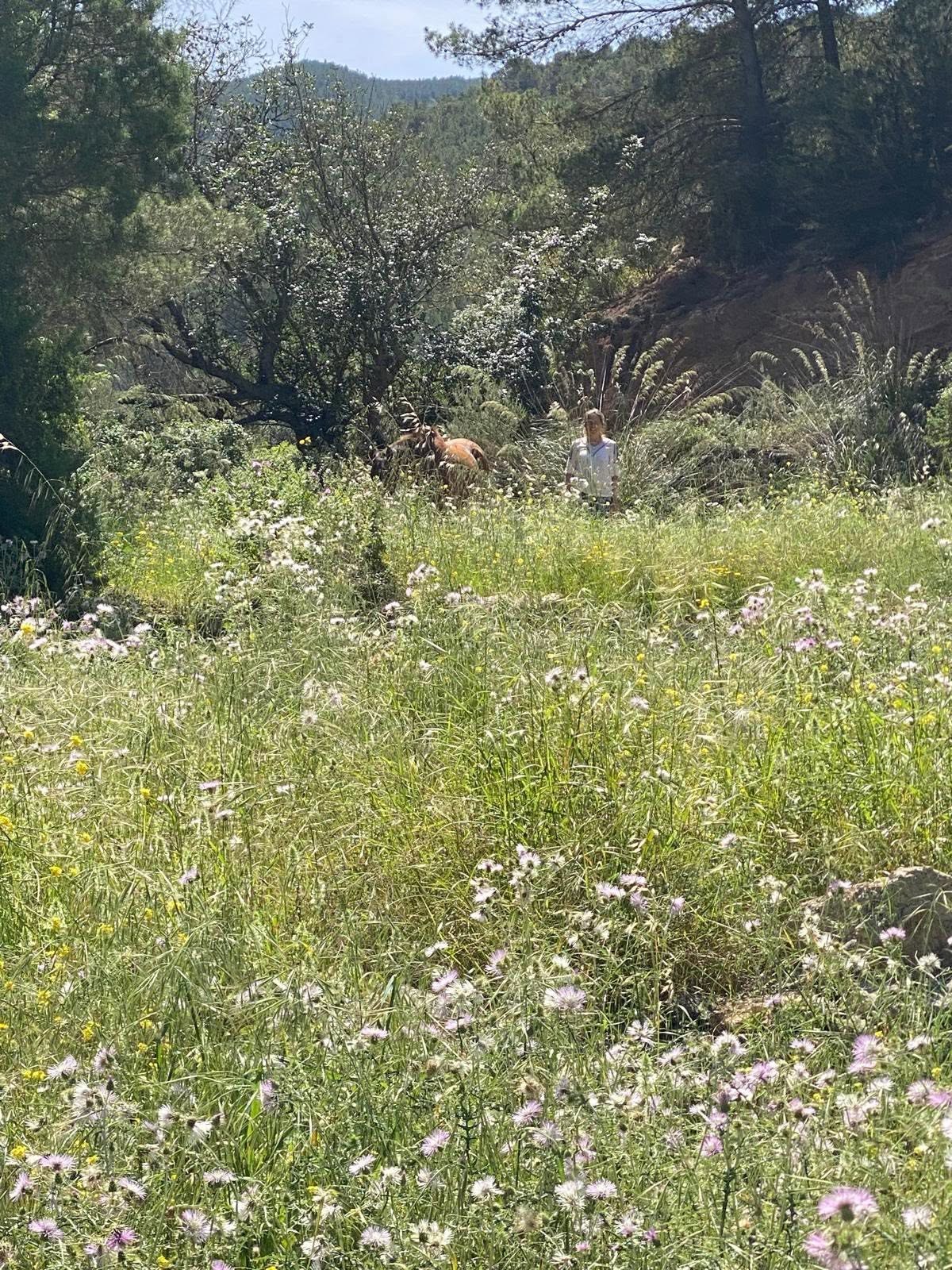
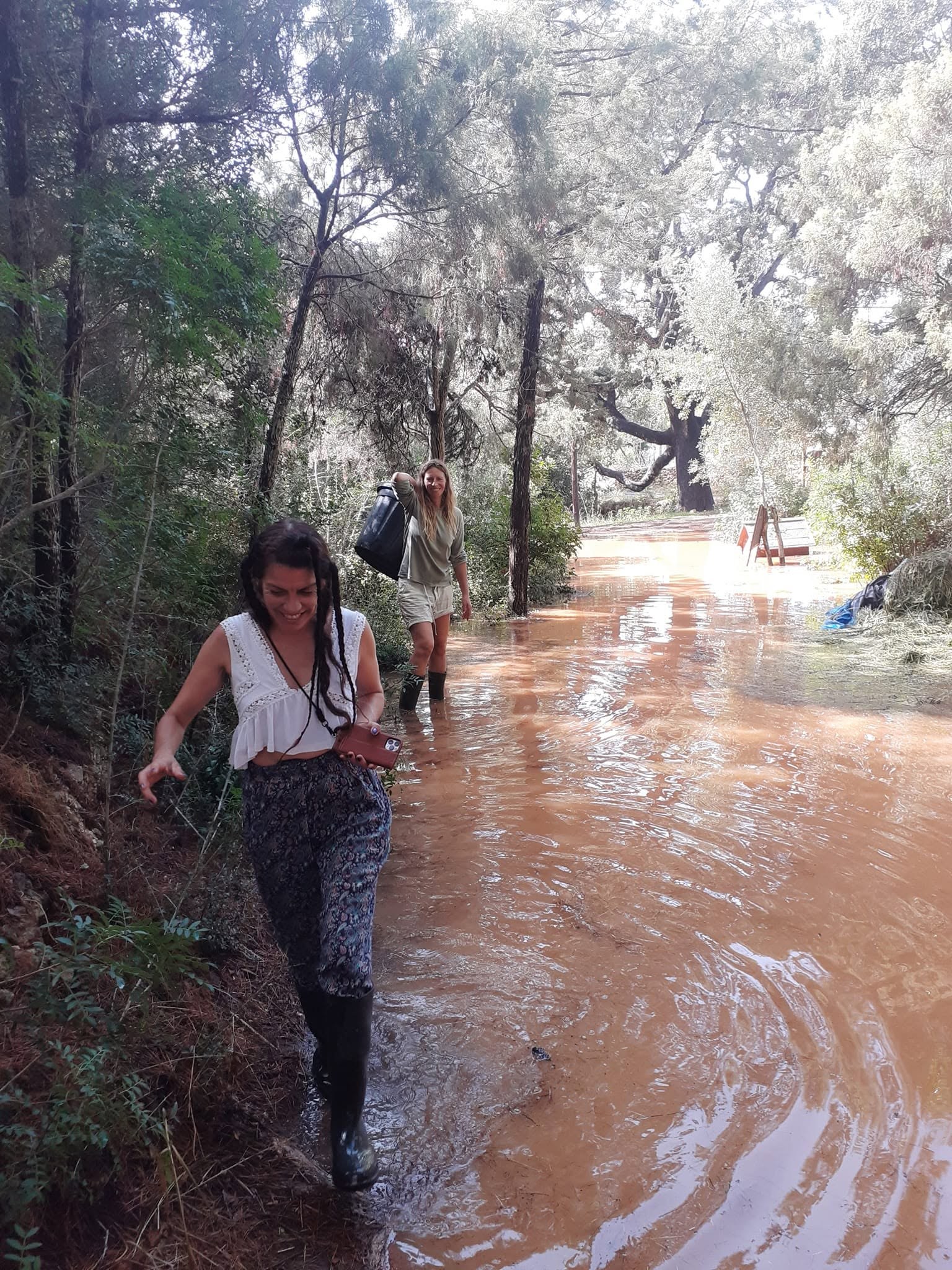
The horses give the land manure. Some stays on our ground; some goes to local farmers.
Ibiza is one case. On the mainland, land feeds more of the horse and costs less. Every place has its own line.
The money
- About 600 € a month
- A rough figure for one horse on Ibiza at a place that keeps horses for others (pupilaje). 350 € food; 250 € feeding, manure, cleaning and the land. Hooves, dentist and vet are extra.
- Two people, half-time
- For eight to ten horses.
- The minimum, at Our Home Can Tigres
- For exact figures, see the meters on the Supporters page: the minimum three horses need each month on Ibiza.
- The numbers
- Horse Presence shows what is needed and what is covered, month by month, in the open book.
The world
The power of Ibiza's energy and the horse's presence, together with the internet (HERE) and the moment we all live in (NOW): a unique and possibly life-changing combination for many. It has to do with ethics, empathy, loyalty, dignity, spirituality, physicality, ecology, safety, instinct and intuition, authenticity, being oneself, connection. A powerful mix.
When a place like this does not last, the horse usually finds another place on Ibiza. There are many conscious people here, and people who came for the nature. Elsewhere, it is slaughter, or a transit place on the way to it.
What we measure
- For the horse
- € per horse per year. Hours of care per horse per week. Days without company, movement or shade: should be zero.
- For the carer
- Hours per day. Days off per year. What of their basic needs the place covers.
- For the land
- Forage bought versus given by the land. Water per horse. Manure returned.
- For the money
- What came in, what it covered, shown month by month.
What we don't know
Whether enough people will value the presence of horses enough, for long enough. Whether a carer can live from this for twenty years. What the land here can carry in a dry decade. We are finding out, in the open.
The one thing that would make this place last twenty years: trust. All kinds of trust, and above all my trust in the protection of the Universe. This is a noble cause. Nothing bad can happen.