PRESENCE
What is presence?
If you are able
to remain in contact with
what is actually happening
within yourself,
with another,
around you
– you are present.
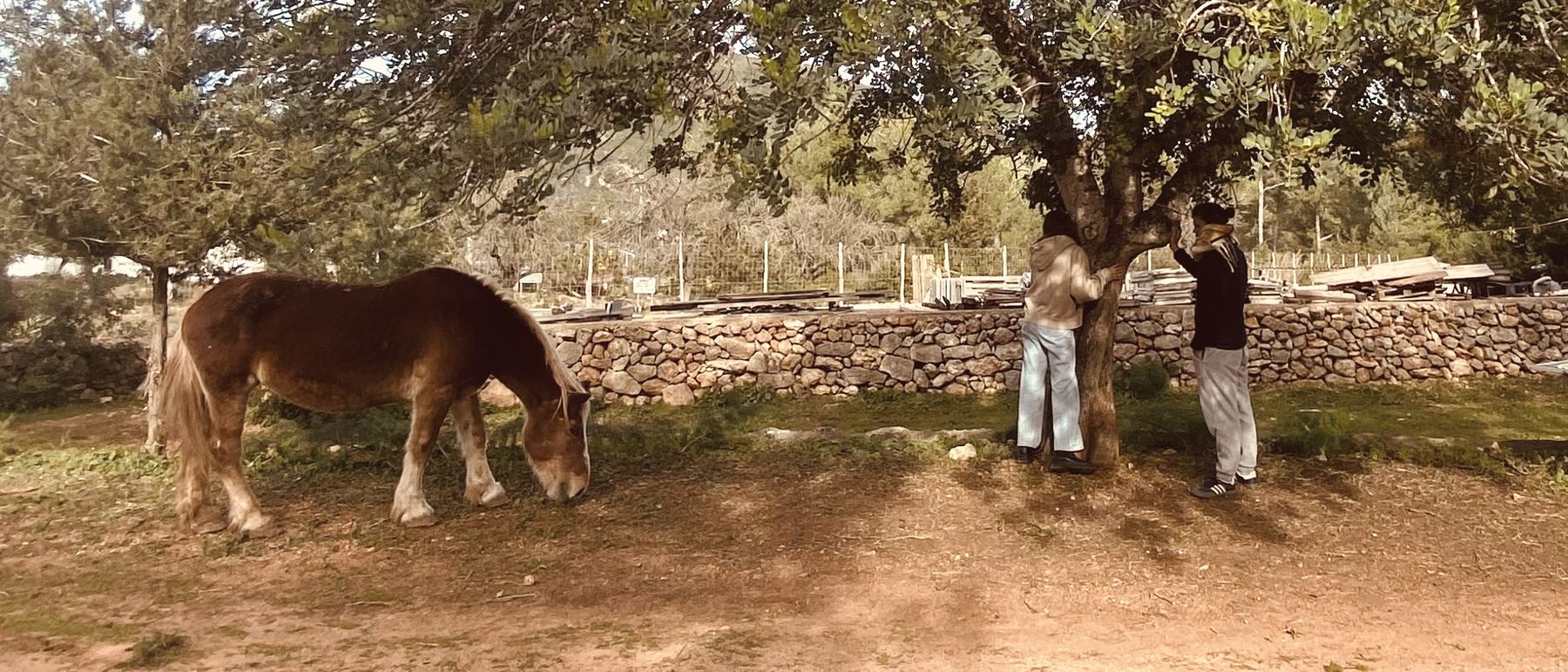
Sometimes being present means noticing something uncomfortable, uncertain, unexpected or difficult to change. It can include discomfort, excitement, grief and conflict.
The point is not to feel a particular way, for example calm. The point is to be here for what is actually happening.
In practice
What does it mean to be present?
Presence is not simply a personality trait that some people possess and others lack. It is a capacity that can be cultivated through awareness, practice, and experience.
We can learn to become more present by noticing when our attention wanders, creating space from digital distractions, becoming aware of our breathing and bodily sensations, and recognising our emotional responses without immediately acting on them.
Presence also involves how we relate to others: listening without rushing to respond, remaining open to uncertainty, and allowing another person's experience to unfold without needing to control or interpret it.
In the presence of horses, these qualities invite a particular kind of attentiveness — to ourselves, to the horse, to our surroundings, and to what emerges in the encounter.
- Attention
- Awareness
- Receptivity
- Embodiment
- Curiosity
- Patience
- Non-reactivity
- Responsiveness
- Openness
- Discernment
- Boundaries
- Acceptance
- Choice
With a horse
A horse does not share our language, so we must learn to notice: the distance between us, the rhythm of its breathing, the smallest movement, a change in posture, where its attention rests, and the timing of its responses. We begin to understand the encounter not through words, but by observing what happens between us.
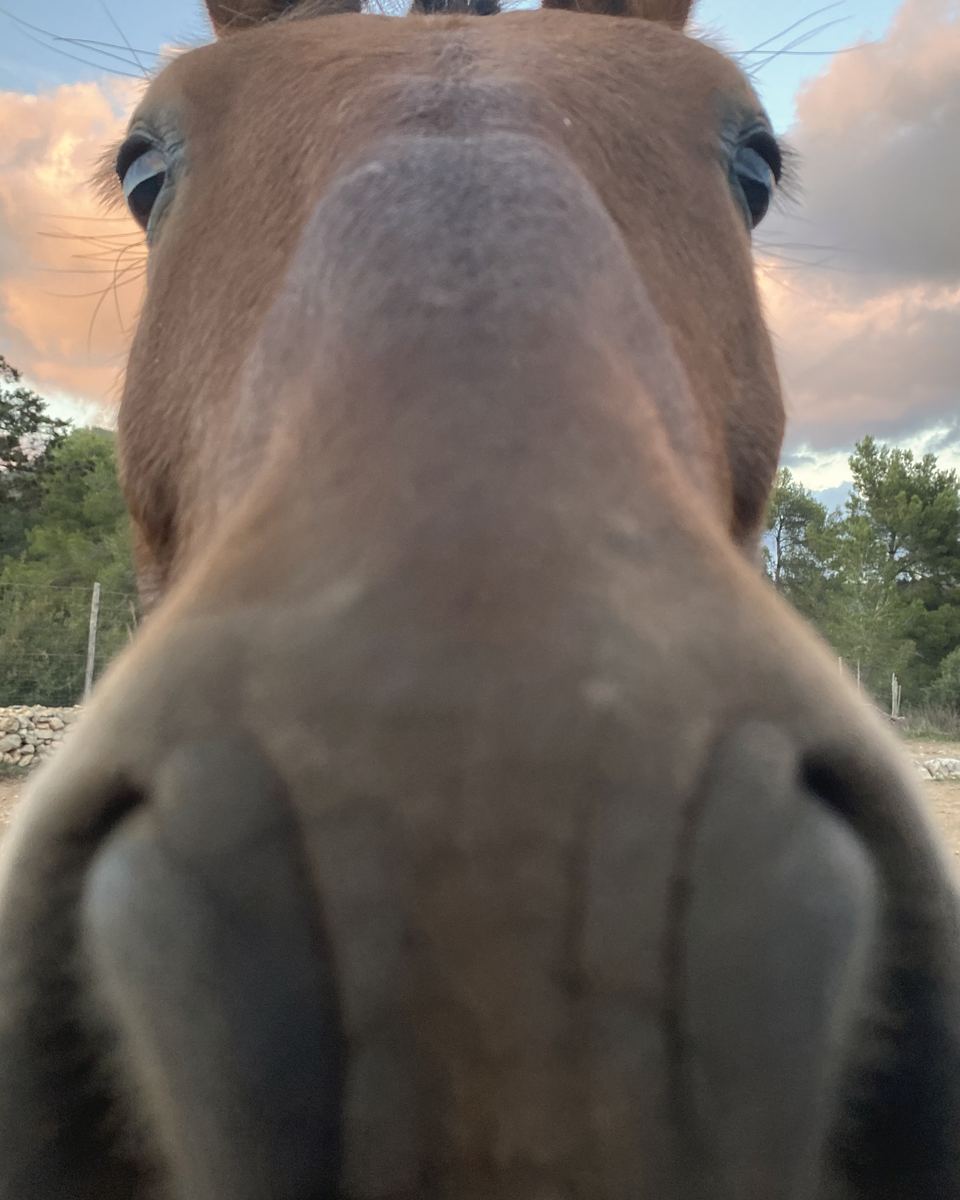
And it goes both ways. The horse is also noticing, also deciding whether to respond, approach, or keep grazing. Its response is its own, and it remains free to do nothing at all.
With ourselves
- What are we feeling?
- What are we assuming?
- What story are we already telling ourselves about what is happening?
- What sensations appear in our body?
- What are we expecting from ourselves?
- Are we judging ourselves?
- What are we trying to control?
- What happens when the horse does not respond as expected?
Between
The most interesting place may not be inside the human or inside the horse. It may be what happens between them.
The relationship
Two beings, responding to each other.
This is where Horse Presence becomes more than an experience with horses. It becomes an enquiry into relationship.
- Power
- Trust
- Boundaries
- Attention
- Communication
- Choice
- Control
- Reciprocity
- Presence
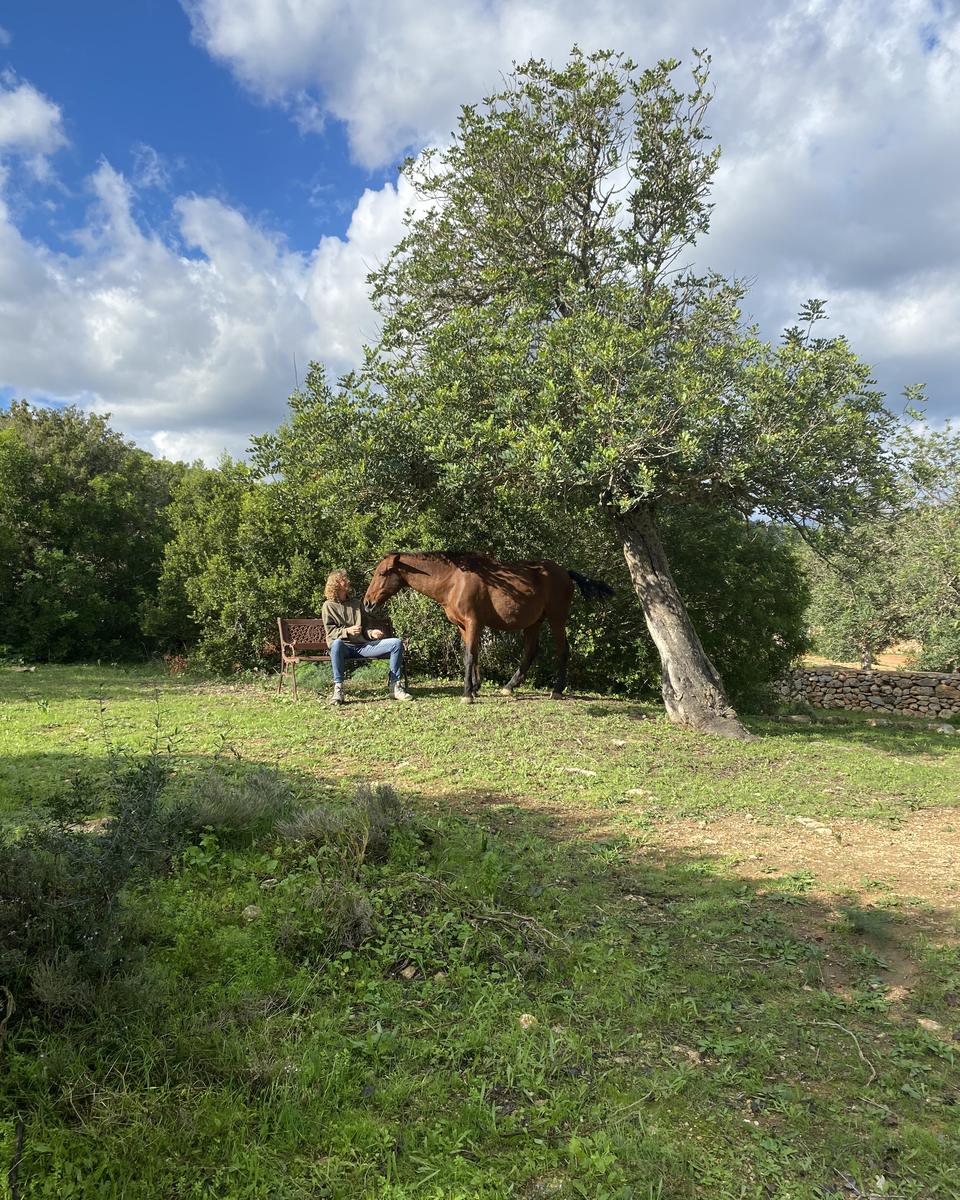
- What happens when we stop trying to produce a particular response?
- What happens when the horse moves away?
- What happens when our expectations are not met?
- What happens when we change our own behaviour?
- What happens when we stay long enough to notice?
- What becomes possible when both beings retain the freedom to participate — or not?
Realisation
Something becomes clear when we stand before an animal that is enormous, ancient, and wants nothing from us.
That clear message stays with us.
Presence for you
How can learning to be present change our relationships and society?
Where do you experience being aware of the present moment?
Is life presence?
Write to us. Your message can be a text, a photo, a video or audio.
It started with a horse
You don't need a horse to practise presence. But a horse can be where you discover it.
You can practise it with:
- a horse.
- another person.
- a child.
- a dog.
- a tree.
- yourself in a mirror.
- yourself without a mirror.
Or simply: one uninterrupted minute of
being here.
 1HorseMinute
can become a life practice.